Footasylum
Not just a shop. A destination.
Reimagining mobile as a commerce & culture platform
Footasylum is one of the UK’s leading fashion retailers, operating at the intersection of streetwear, sport and youth culture. With a strong digital presence and a loyal, style-conscious and heavily Gen-Z audience, mobile plays a critical role in how the brand connects with customers and drives revenue.
For a brand whose customer base is heavily Gen-Z, the mobile app is not simply a sales channel. It is the primary way the brand connects with its audience and the most direct expression of what Footasylum stands for.
Key results
The impact of Footasylum’s investment in mobile was immediate and measurable.
-
+77%
year-on-year conversion rate increase at launch
-
39%
drop in uninstalls
-
100%
crash-free since launch
-
+9%
average order value increase
-
-60%
uninstall rate vs. pre launch levels
-
#9
iOS shopping category ranking at launch
An app that no longer matched the brand
The existing app had not kept pace with either the brand or its customers. Performance limitations, security concerns and a rigid architecture made it difficult to introduce new features, respond quickly to trends or deliver the kind of experience the audience expected. The gap between what the app offered and what the brand represented had become difficult to ignore.

Rebuilding the foundation that was holding Footasylum back
Footasylum’s existing app had accumulated a series of technical problems that were directly affecting the customer experience. Crash rates were high, the checkout handoff from the app to the web was poorly managed and created unnecessary friction at the point of purchase, and a legacy codebase made new feature development slow to deliver. The codebase also supported two separate brands, Footasylum and Sevenstore. The result was an app that frustrated customers to the point of uninstalling it.
The app was rebuilt from the ground up, with the goal of creating a platform that reflects Footasylum’s identity as clearly as it supports its commercial objectives. User flows were completely redesigned from scratch, and the checkout was rebuilt as a fully native experience within the app, removing the handoff to web that had been causing friction and drop-off at the point of purchase.
The result is an experience that moves at the pace of the brand: faster to load, easier to navigate, and more straightforward to buy through.
An investment returned in a month
The impact went straight to the bottom line: the additional revenue generated was enough to deliver a complete return on Footasylum’s initial development investment within the first month.
The architecture’s flexibility also enabled Footasylum’s premium brand ‘Sevenstore’ to have an app that shares the same foundations as the Footasylum app, but includes features appropriate to the curated collections and content a premium store requires.
The app reached the Top 10 in its iOS Shopping category, and November 2025 was a standout month across both stores: store listing visitors grew 249% month-on-month, total installs grew 88.5%, and product page views jumped 175%. The app peaked at #9 in Apple’s Shopping category and reached #27 on Google Play, with a +1 average rank growth on Android.
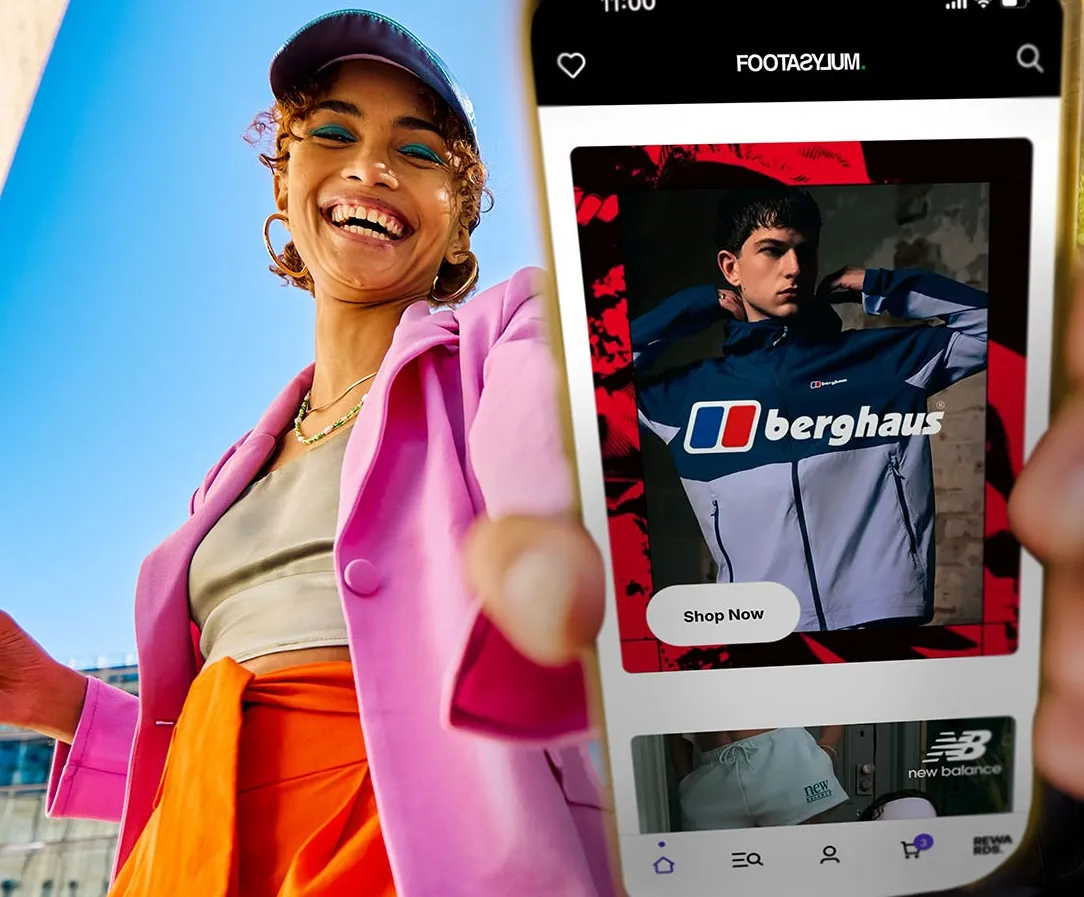
Building a platform for the Gen-Z audience
The rebuild gave Footasylum the ability to manage and evolve the app on its own terms. Campaigns can now be created and launched directly within the platform, allowing the team to respond to trends without being constrained by technical limitations.
The Lockedin Hub illustrates what that makes possible: a new content destination built around voting mechanics and video content tied to upcoming seasons of Footasylum’s massively popular proprietary content, blending entertainment and commerce in one space. Viewers watching the series are directed into the app to vote for their favourite creator, explore the exclusive outfits featured in the show, and purchase the exact tracksuits and trainers worn on screen.
App Store Optimisation work extended this into acquisition. A custom product page built for Black Friday beat the default conversion rate by 78%, and a gifting-season Custom Product Page beat it by 37%, showing that the same platform driving the in-app experience could be tuned to specific commercial moments.