Over half of consumers now use AI to shop
New research across 11 markets reveals a growing generation gap in AI shopping habits, with consumers embracing price comparisons but remaining cautious about handing over purchasing decisions.

51% of consumers use AI assistants, with 45% using it at least weekly, to help make shopping decisions, according to Apadmi’s Mobile Loyalty Report 2026: Global Edition, which surveyed more than 3,300 consumers across 11 markets.
This echoes recent research by YouGov which found planned AI use for Black Friday and Cyber Monday this year has almost doubled (34%) since 2025 (19%), with “finding the best price” ranking the top use case for using AI.
Consumers are increasingly open to practical AI assistance, with 43% happy for AI to compare prices and find the best deal, and 22% willing to let it automatically apply offers and loyalty points. However, just 8% would allow AI to complete a purchase without checking first.
The findings reveal a significant generation gap in AI adoption. While 22% of 18–24-year-olds never use AI for shopping, that figure rises to 68% among over-65s.
The research also highlights substantial differences between markets. Sri Lanka leads the way, with 71% using AI assistants for shopping decisions at least weekly, followed by Spain (59%) and Poland (53%). The UK sits below the global average at 41%.
Despite differences in AI adoption, consumers across all markets are willing to exchange personal data for better value. Nearly nine in ten shoppers (87%) would share at least some personal information in exchange for better prices and more relevant offers, although 13% say no offer is worth sharing their data.
The findings suggest that shoppers are more comfortable choosing what information they share than having their behaviour tracked automatically, presenting an opportunity for brands to build trust through greater transparency and control.

From rewards to real value
“It’s no longer enough to reward customers for what they’ve already bought. Loyalty apps need to help people make better purchasing decisions, whether that’s comparing prices, finding relevant offers or making rewards easier to use. AI can play a valuable role here, without taking control away from the customer. Brands that combine useful AI, relevant rewards and greater control over personal data will be better placed to earn loyalty, rather than simply incentivise another purchase.”
– Marcus Hadfield, Chief Strategy Officer, Apadmi
When price tests loyalty
The research also explored how loyalty programmes influence shopping behaviour. More than three-quarters (78%) of consumers say loyalty apps change how they shop, most commonly by encouraging them to shop with a brand more often. However, just 17% remain loyal when a competitor offers a cheaper price.
In the UK, 39% of 25–34-year-olds say they spend more because of a loyalty app, the highest proportion of any age group across all 11 markets surveyed. In the UK, Tesco ranked as the most popular loyalty app (59%).
The Mobile Loyalty Report 2026: Global Edition explores consumer attitudes towards loyalty, mobile apps, AI and data sharing across Australia, Belgium, Canada, France, Germany, the Netherlands, Poland, Spain, Sri Lanka, the UK and the USA.

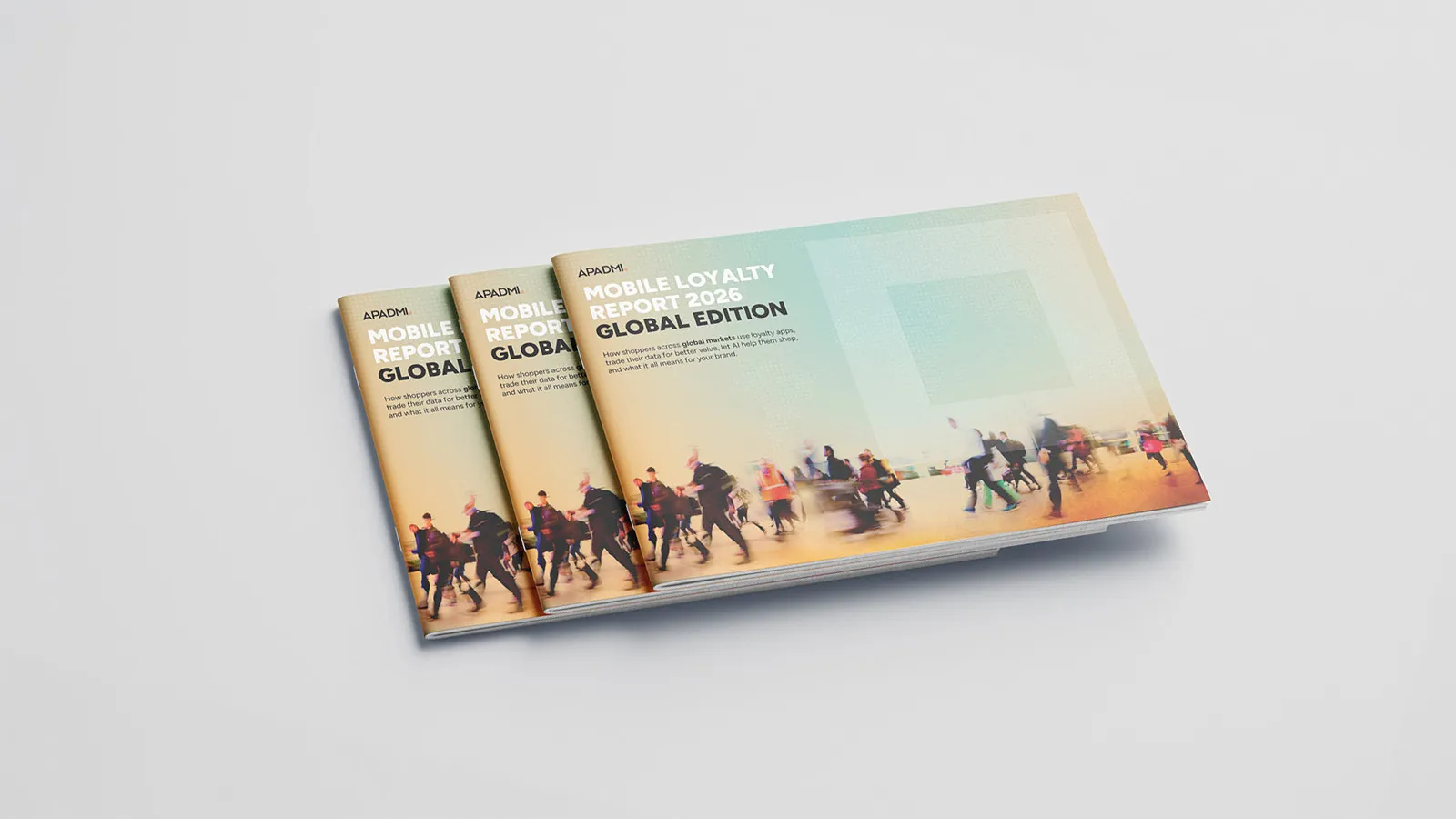
Mobile Loyalty Report 2026: Global Edition
We surveyed consumers in 11 markets to find out what keeps customers in your app, what drives them out of it, and how far they’ll let AI into their shopping.