What the relaunch of Hyves tells brands about building trust
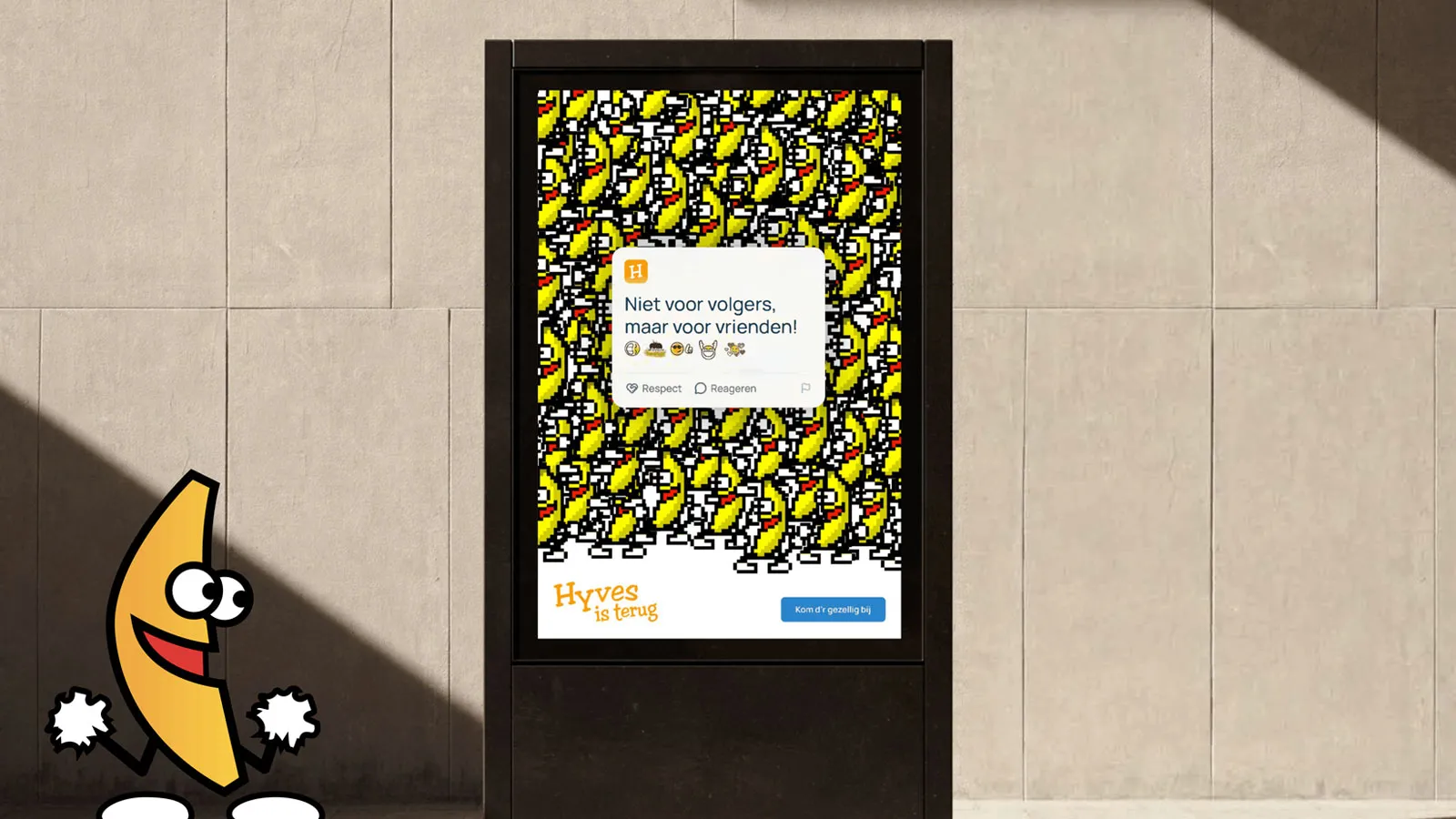
In September 2026, Hyves, the iconic Dutch social network, made its comeback 22 years after it first launched. When Mediahuis first explored bringing it back, the obvious question was whether anyone actually wanted a social network from 2004 in 2026. Almost 60% of people surveyed said they probably or definitely would.
Nostalgia was part of it. The other reasons were personal connection, fewer algorithms, clarity and simplicity. That reads like a wish list for a social network, but it is really a list of complaints about social media today, and every company with an app should be paying attention.
Most platforms have quietly changed category
What was once about keeping up with people you know has transformed into broadcast media optimised for time spent. Followers replaced friends, which is why Hyves’ launch line, “not for followers, but for friends“, lands so well. No addictive algorithms and no endless scroll is the product.
The same playbook has spread well beyond social networks. Streaks, notification streams and feeds bolted onto apps that never needed one all look good on a dashboard. Together, they produce the noise people are trying to escape.
Brands need retention, revenue and customer insight, but users usually want to get something done, or to feel part of something.
These are not opposed, but reconciling them starts with three questions before a feature is built:
Not every app needs to be social. A banking or pharmacy app earns its place by being fast, clear and trustworthy, making restraint a design decision, and often the most valuable one a product team makes.
Trust is an architecture decision
Connection depends on trust; people don’t actively want to share their lives with a platform they suspect is harvesting them. The new Hyves app runs on European infrastructure, hosted in Europe, with a commitment that no user data is shared with third parties. That last promise matters most, and it is the hardest to keep.
Where data is stored is the easy part; choosing a European data centre is a procurement decision. Where data flows once it is in use is an architecture decision, and that is where most apps are exposed. The default stack is assembled from services operated elsewhere: analytics, advertising SDKs, authentication, email, crash reporting, even fonts.
One study of almost a million Android apps found that 88% could share data with Alphabet-owned companies and 43% with Facebook. An app hosted in Frankfurt that embeds a dozen of these has a European address and a global data footprint. Few product owners could name every party their users’ data reaches.
Committing to share nothing with third parties constrains every later decision: how you measure, how you advertise, how you diagnose bugs, even how you send a password reset. That is why it is far easier to make on day one than to retrofit. AI adds another layer; every assistant, summary or recommendation is potentially user data leaving the device for a model provider, and the list of third parties grows with each feature.
None of this means every app must be rebuilt on European infrastructure. For many products a global provider remains the right answer, but it should be a deliberate choice you can explain in public, not a default inherited one SDK at a time. Nor does it cost brands their place: Hyves launched with Albert Heijn, Bol, Corendon and Chiquita as partners. Brands still want to be where people feel comfortable, they simply have to earn that presence rather than buy their way into a feed.
Where to start
Hyves is also being built with its community rather than behind closed doors, and users who help shape a product feel part of it in a way no engagement campaign can replicate.
The practical steps do not need to wait. Map every SDK and service in your app, including the unglamorous ones like login, email and fonts, and what data each one receives. Audit your notifications and remove the ones nobody would miss. Measure whether users achieved what they came to do, not just how long they stayed. Before adding a community feature, ask whether a community already exists that you can serve. Do all of this knowing that attention earned, and trust kept, lasts far longer than attention taken.

Let’s build what’s next
We work with ambitious organisations to design, build, and scale digital products that solve real problems, improve customer experiences, and deliver measurable impact.