Sri Lanka’s digital growth opportunity
Highlights from our Colombo event
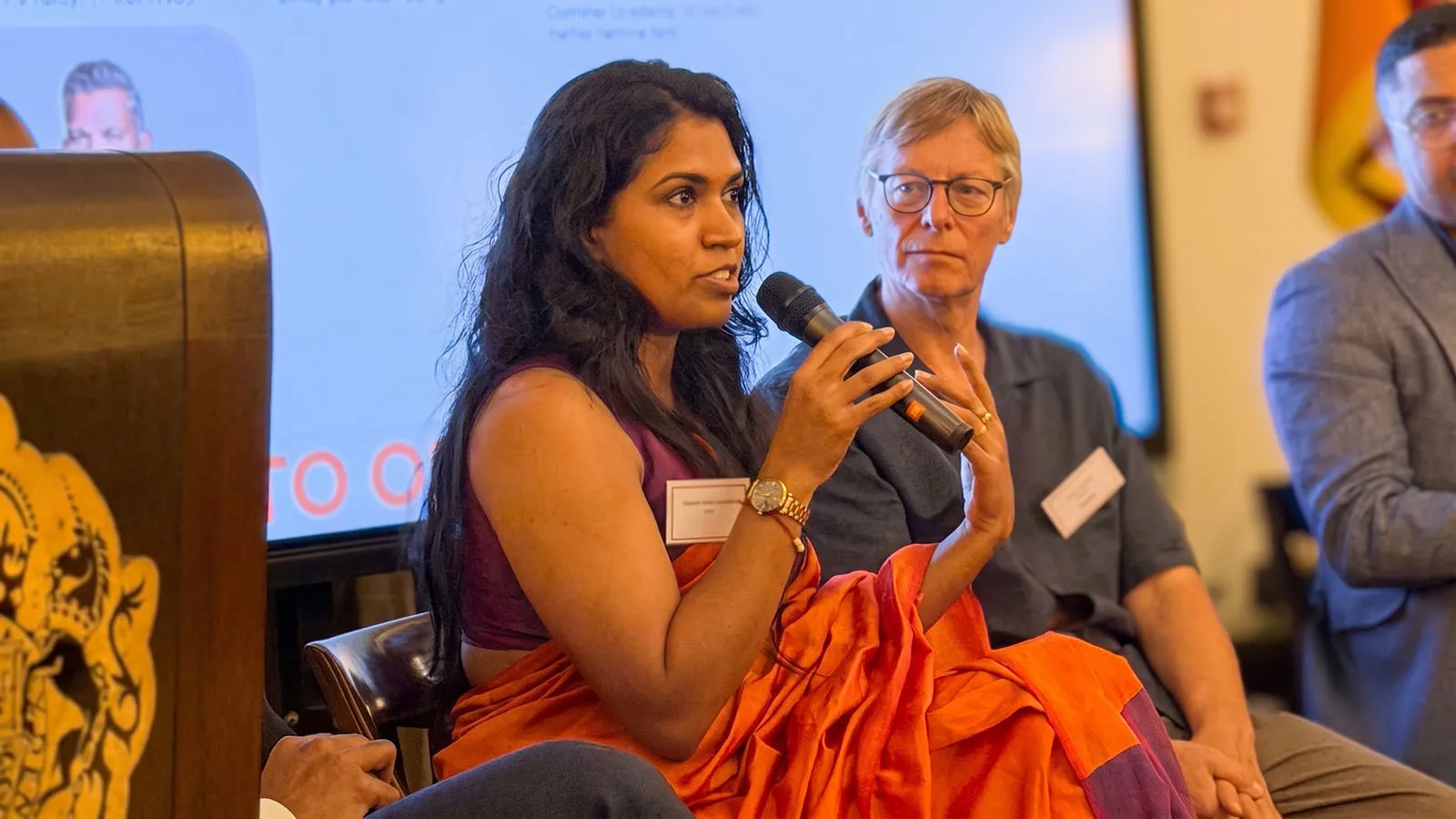
On 15 September 2026, Apadmi hosted an event in collaboration with the British High Commission in Colombo, Sri Lanka. The event brought together leaders from across Sri Lanka around one idea: digital products should drive growth, not just add IT cost.
The focus was on business impact: bigger baskets, stronger loyalty, richer customer data and lower cost-to-serve. Across the discussion, a few themes came through clearly.
Sri Lanka’s moment is now
Mobile data usage in Sri Lanka reached 1.03 million TB in Q2 2026, up from 786,636 TB in the same quarter last year. That is 31% year-on-year growth, against 29.4 million mobile subscriptions and 21.86 million mobile broadband subscriptions.
Mobile can now reach almost the entire Sri Lankan market, with plenty of headroom left. 71% of devices are smartphones or tablets, which leaves 5.61 million basic and feature phones still to convert. National digital literacy sits at 70.8%, rising to 94.5% among 20 to 24 year olds.
Local brands are already making that market. PickMe and Keells are creating new mobile behaviours and setting the standard customers will expect everywhere else.
That is the opportunity for Sri Lankan businesses. Turn this growth in connectivity and attention into transactions, acquisition and long-term customer relationships, before someone else does.
Attention is not the same as advantage
The commercial case for mobile is already well established elsewhere. App users are more engaged, more loyal, spend more and are more responsive, so the relationship itself becomes a commercial asset.
Apadmi’s Chief Strategy Officer, Marcus Hadfield, explained that the pattern holds across very different sectors, which is what makes it useful. Retail, banking and healthcare arrive at the same place from different directions, because the underlying mechanic is the same. A direct, personal relationship with every user changes what a business can do.
The gap between attention and advantage is where the work sits. Sri Lankan brands like PickMe and Keells are already closing it, creating new mobile behaviours and setting the standard customers will expect everywhere else.
A deeper dive into Keells Nexus’ success
Niresh Muthuratnanandan, Head of Omni Commerce, Digital & Loyalty at Keells Supermarkets, joined us to share what six months of Keells Nexus has taught them.
As he put it, the challenge was never convincing customers to join loyalty. It was making a 20-year-old loyalty relationship relevant to how people live today. Keells already had 2.9 million members, and they were modernising something customers trusted, instead of starting from scratch.
Since launch, Keells Nexus has passed half a million app installs and holds a 4.6 star average rating across Google Play and the App Store. More telling than the download numbers was what drove engagement. Missions and progress mechanics outperformed a static points balance, first-run friction turned out to be where most value leaked away, app speed and account recovery, the unglamorous parts, were where trust was built or lost.
His closing line captured the point of the whole morning: digitising loyalty isn’t just about creating an app, it’s about creating habits.
Niresh also spoke about the collaborative work with Apadmi that made it possible, from global pattern recognition and speed without shortcuts, to a willingness to challenge assumptions and work as co-owners rather than in vendor mode.
Where to invest first
The question of where to invest first was at the heart of a panel discussion moderated by Apadmi’s Chief Growth Officer, Mark Collin. He was joined by Malik Induruwana, Chief Information Officer at HSBC Sri Lanka & Maldives; Jiffry Zulfer, Founder and CEO of PickMe; Uthpala Pinnaduwahewa of Hatton National Bank; and Apadmi’s Marcus Hadfield.
Despite representing very different sectors, the discussion kept returning to the same challenge: where should businesses invest first to make the biggest impact?
It is a question worth sitting with. Sri Lanka has moved into a period of genuine strategic investment, and the temptation is to start with the technology; “we need an app” or “we need AI”. The better starting point is the business outcome you are trying to reach, whether that is revenue, cost, customer experience, risk or new capability, and then working out where mobile can move it and what has to be in place to make that happen.
For example, Keells did not set out to launch an app for the sake of it; they set out to make a 20-year-old loyalty relationship more useful than ever for both customer and brand, and the app followed from that.
The opportunity is open, for now
Mobile already reaches almost everyone on the island, and attention is growing by the quarter. The advantage will go to whoever turns that connectivity and attention into transactions, loyalty, productivity and better services, and builds a direct relationship with customers before their competitors do.
That window is open now, but it will not stay open indefinitely.
The question Marcus left the room with is a good one to sit with: What could your business do differently if every customer, employee and asset could be connected through one mobile platform?
The answer is worth working out properly, with evidence behind it, before anyone starts building. Not sure where to start? Apadmi’s Digital Growth & Readiness Review can help you to kickstart your mobile growth journey.

Ready to turn ambition into action?
Apadmi’s Digital Growth & Readiness Review identifies where digital can create the greatest value for your business, giving you clear priorities and a practical plan for what to do next.