


National Media Trust Monitor: Trust in Dutch news is holding steady, attention isn’t.
Date
16/03/2026
Time
12:00 am
Location
Amsterdam
At a time when disinformation and fake news are increasingly prevalent, trust in the media is more important than ever. The National Media Trust Monitor, an initiative by Newcom and Pinch (part of Apadmi), provides a clear insight into how people in the Netherlands perceive the reliability of news brands.

8,090 Dutch people aged 12 or older participated in the research, which measured 19 national news brands, 31 regional news brands, 7 alternative news platforms, and 7 social media platforms.
The survey took place in November 2025, and the headline results were presented at an event hosted by Apadmi in Amsterdam in March 2026.
The headline finding was clear: Dutch audiences continue to trust journalistic news brands at a remarkably steady level, but that's only half the story. Alongside that stable trust, a group of more than two million people in the Netherlands is increasingly tuning out of news altogether. This isn't a trust crisis. It's an engagement crisis. And that's a harder problem to solve.
Trust scores a passing grade, but not everyone is convinced
On average, Dutch people rate the trustworthiness of news across all platforms at 6.7 out of 10. That may sound modest, but in today's media landscape, plagued by disinformation, AI-generated content and algorithmically driven feeds, ‘trust’ is far from guaranteed.
As you’d expect, traditional news brands outperformed social platforms, with regional media scoring an average of 7.6, and national news brands 7.5. For many people, journalistic news brands serve as an anchor in a sea of noise: places where sources are verifiable, errors are corrected, and editorial decisions are explainable. That said, not everyone is persuaded; around one in three Dutch adults gave the news media a score of 6 or lower.
Social media as a trustworthy news source split the audience. Nearly half scored it an average of 6.1 (not bad compared to the overall average across all platforms), but the other half scored it as outright untrustworthy.
A growing group is walking away
Routine followers and pragmatists make up more than 80% of the news audience, with a small group of true news junkies (5%) consulting multiple sources every day. On the flip side, there is a rapidly growing group of disengaged people. Some 12% of the Dutch population is now classed as news-disinterested, with a further 4% actively avoiding news altogether. This group has doubled in just three years.
These disengaged audiences are disproportionately young, consume news almost exclusively through social media, and vote less frequently. For them, news is no longer a habit—it's something they stumble across in a feed. It's there, on the platforms with the lowest trust scores, that they encounter most of their information.
The news app as a bridge back
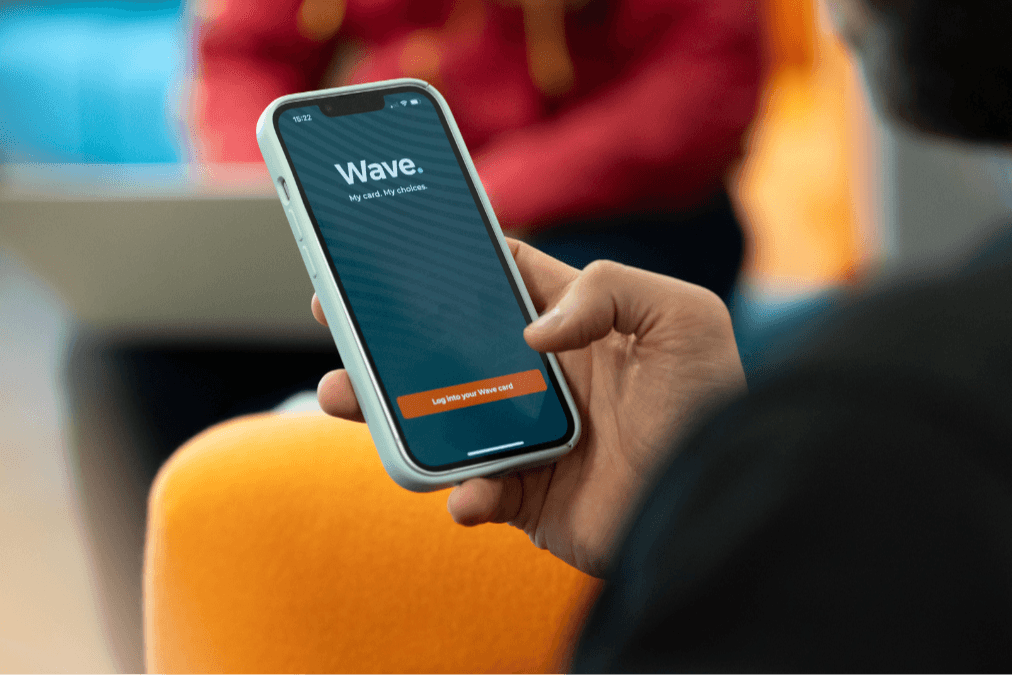
Apps are one of the most significant and underestimated opportunities for news organisations. For a large share of Dutch audiences, the news app is the primary point of contact with a journalistic brand. Not the website, not the print edition, but the app on their phone.
That makes app quality far more than a technical consideration. Slow load times, unclear push notifications, or a cluttered interface directly undermine a sense of trustworthiness.Conversely, a well-designed app with clear navigation, depth of context, and transparency about sources can foster a sense of reliability that extends well beyond the editorial content itself.
For audiences at risk of disengaging, the app is also the most natural entry point back in. Not through long-form articles, but through an accessible, well-structured experience that makes news feel relevant without being overwhelming. News apps are no longer just a distribution channel—they are an expression of a brand's journalistic identity.
AI: welcome as a tool, but only with transparency
The Trust Monitor also examined the growing role of artificial intelligence in news production. The findings are clear: Dutch audiences are critical, but not outright opposed.
Two-thirds of respondents consider it unacceptable for news to be written entirely by AI. At the same time, more than a third are open to AI in a supporting role, helping with fact-checking, structuring information or flagging inconsistencies, so long as that use is communicated transparently. Three in four Dutch adults say they want to know when AI has been involved in the production of an article.
The message is straightforward. Trust doesn't require the absence of technology. It requires transparency about how technology is used.
What this means for news brands
The monitor points to one central challenge: news organisations are not primarily in the business of rebuilding lost trust. They are in the business of re-engaging a growing share of the population that is quietly drifting away.
Re-engagement won't be achieved through more content or higher publishing frequency. It requires a clear, consistent experience across every touchpoint, and increasingly, the app is the most important of those. It requires transparency: about sources, about process, about the role of technology. And it requires the ability to make news feel relevant to people who are slowly losing that sense of relevance.
Share