
How brands are using mobile to win big with the FIFA World Cup 2026

The FIFA World Cup 2026 is the biggest tournament in the competition's history, with global viewership forecast to exceed 6 billion engagements across TV, streaming and digital platforms. With that amount of eyeballs, it’s also the biggest test yet of a simple marketing truth: attention without a mobile mechanism to capture it is wasted attention.
Millions of fans are already glued to their phones during matches, checking scores, posting reactions and swapping predictions in group chats between kick-offs.
A brand doesn’t have to be an official sponsor with the biggest broadcast budgets to capture the attention of fans. Those that have built a mobile moment simple enough to join in seconds, but sticky enough to bring people back for the next match, the next round, or the next purchase are the ones truly maximising on the worldwide event.
Here's how four different brands are doing exactly that, and what it tells us about turning a trending event into measurable commercial results.
1. Greene King: Turning a pint into a prize so that football drives footfall
Greene King's World Cup activity is a masterclass in linking everyday transactions to tournament-long engagement.
Its World Sticker Stacker campaign rewards fans with a pack of digital stickers every time they order through the Greene King app or scan their loyalty ID at the till during a World Cup match, with a maximum of ten packs available per customer per day. A full set of stickers can be redeemed for prizes including competition entries, merchandise and vouchers, running from the opening match right through to the final.
Alongside it sits the World's Biggest Sweepstake: fans pick their home nation in the app, get assigned a second "adopted" nation, and earn a free drink every time that second team plays. Fans are able to lock in their team before a set deadline to bank up to eight free drinks if their side goes all the way to the final.
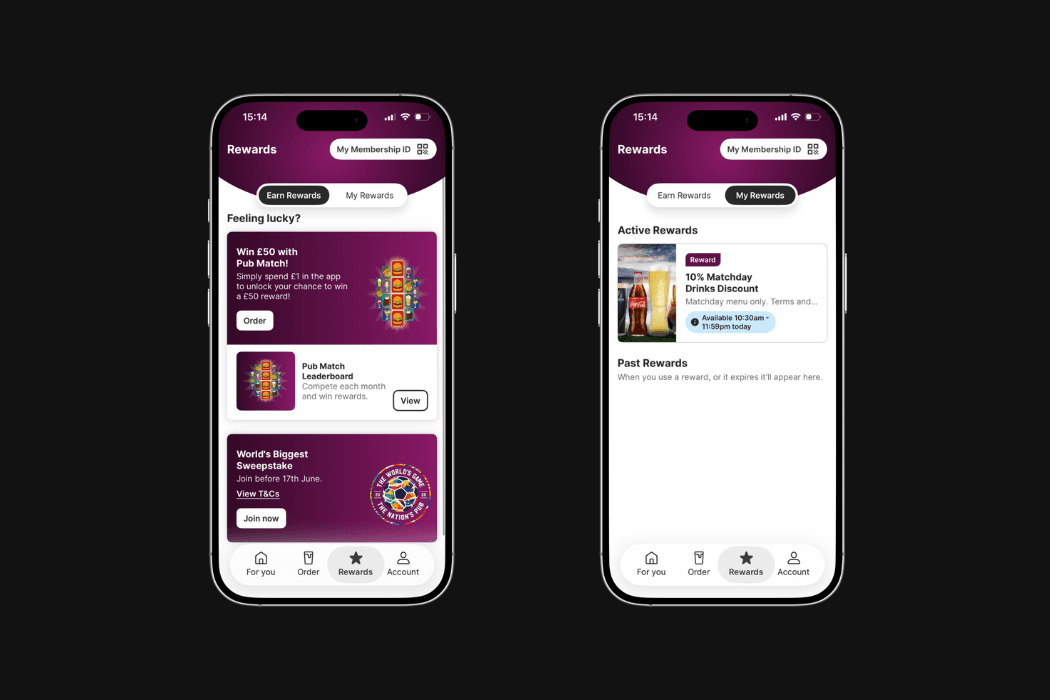
Whilst the football theme is an important way to capture fans’ attention during this season, the mechanic behind this activation is equally as important. Every visit and every order becomes a reason to open the app, and every app interaction becomes a reason to walk back into the pub. It converts a passive occasion (watching the game) into a repeatable, trackable loop of in-store visits and app-driven orders across a six-week window.
2. Powerade: QR codes that turn packaging into a mobile entry point
In the U.S., Powerade's "Power Your Legacy" campaign shows how physical products and mobile engagement can be stitched together at scale. Bottles carrying World Cup branding include QR codes that lead to "scan and win" sweepstakes for Powerade-branded footballs and reusable bottles, turning a supermarket shelf or vending machine into the start of a mobile journey rather than the end of the transaction.
It's a mechanic that costs very little to add to existing packaging, but it does two things well. Firstly, it gives the brand a direct, trackable measure of how a mass-market retail campaign is actually performing. Secondly, it gives shoppers an instant, low-friction reward for a purchase they were probably going to make anyway. That combination of low friction for the fan and high measurability for the brand is exactly what makes a tactic like this repeatable well beyond a single tournament.
Many direct to consumer brands are unsure of how to connect to their customers beyond a purchase; but this simple yet effective activation is a great way for brands to test the mobile water.
3. Asda: Turning kick-off times into an app ordering spike
Asda’s approach was all about making ordering easy at the exact moments fans wanted it. The UK grocer expanded its on-demand delivery partnership with Deliveroo to more than 850 stores, and extended its delivery windows into the late evening (up to 11pm or midnight in some locations) specifically to match the tournament's late kick-off times for UK viewers.
The results were immediate and measurable. Asda reported up to a 30% spike in online orders during half-time and so-called "hydration breaks," with sales of ice cream and desserts up 127%, beer up 76% and soft drinks up over 50% in a single week, as shoppers used the app to top up mid-match rather than waiting until full time.
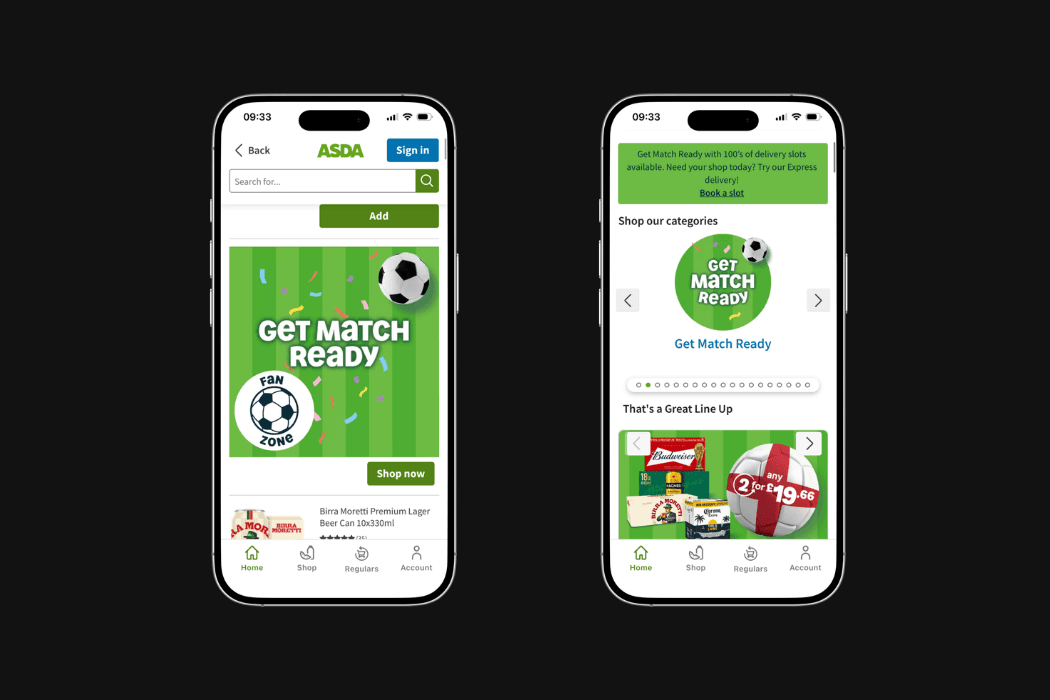
These results were all without offering prizes, no sweepstakes and no branded packaging required; just a mobile ordering journey engineered to be fast, surface the right products at the right time, and be available exactly when demand peaked.
It's a useful counterpoint to the other examples here: sometimes the mobile "campaign" isn't a campaign at all, it's simply operational. This was about making sure the brand could actually capture the demand a cultural moment creates, at the moment it exists.
4. Uber: making the app part of the fan experience itself
Back in the U.S., Uber's World Cup activity shows what happens when a brand treats its existing app as the main event. Its "Made for Match Day" programme runs interactive challenges, photo moments, giveaways and rewards across five cities. Features already built into the app, like its Wait & Save option, were brought to life physically, with "Wait & Sip" activations set up in rideshare pickup zones during peak demand periods so waiting for a ride became part of the fan moment rather than a friction point.
Rather than bolting a competition onto the app, Uber used the tournament to spotlight a feature that already existed; proof that "mobile activation" doesn't always mean building something new. Sometimes it means finding the cultural moment that makes an existing feature suddenly feel relevant, useful and worth talking about.
The common thread: mobile turns a moment into a metric
Strip away the football branding and every one of these campaigns follows the same underlying pattern:
A trending, time-boxed moment (the tournament) creates a spike in attention that would otherwise be difficult and expensive to manufacture.
A mobile mechanic; an app order, a QR scan, an in-app entry, or a loyalty scan gives fans a frictionless way to act on that attention immediately, rather than losing it to a scroll-past ad.
A reward loop or a frictionless moment (stickers, sweepstakes, free drinks, discounts, or simply an app that's ready and fast exactly when demand peaks) gives people a reason to keep coming back across the full length of the event, not just on the day they first engaged.
Built-in measurability means every one of these brands can see, in near real time, exactly how many people engaged, ordered, or visited as a direct result — something a billboard or a TV spot simply can't offer.
That last point matters most. Trending topics and major events come and go all year, but what separates brands that generate headlines from brands that generate results is whether they have a mobile experience ready to convert that attention into an in-store visit, an app order, or a completed purchase, with the data to prove it.
The World Cup is this summer's example, but the same principle applies to any brand asking, "How do we make the most of this moment?". The answer increasingly starts with the same question: what's the one thing we want someone to do on their phone right now to engage with our brand, and how quickly can we let them do it?
Want to maximise mobile moments with your customers to drive commercial impact? Talk to our experts today.
Share